


6V vs 12V vs 24V: Choosing the Right Electric Go Kart Voltage for Your Child
Voltage is the only spec on a kids' electric go kart that decides both who can drive it and how long it stays interesting. Pick too low and a five-year-old outgrows it by summer; pick too high and a three-year-old is handed more speed than their steering can manage. Here is how the three XJD voltage tiers split, and how to choose once.
The three tiers, honestly divided
- 6V — the first-driving tier. Gentle acceleration and a walking-to-jogging pace suit ages roughly 2–4 on smooth, flat surfaces. The point of a 6V kart is steering practice, not speed.
- 12V — the main tier. Confident pace, real run times and enough torque for lawn and packed dirt. Most families land here: fast enough to thrill a 5-year-old, manageable enough to trust.
- 24V — the committed tier. Highest speed and strongest climbing for riders 8 and up who have already proven steering and braking judgment on a slower kart.
Match voltage to the driver, not the driveway
The driveway will grow; the driver's judgment is what it is. A cautious 6-year-old is usually better served by a 12V driven well than a 24V driven tentatively. The reverse — an impulsive young driver in a 24V — is how karts end up parked. Speeds should be earned in steps: a season of clean 12V driving is the ordinary qualification for a 24V.
Run time and charging reality
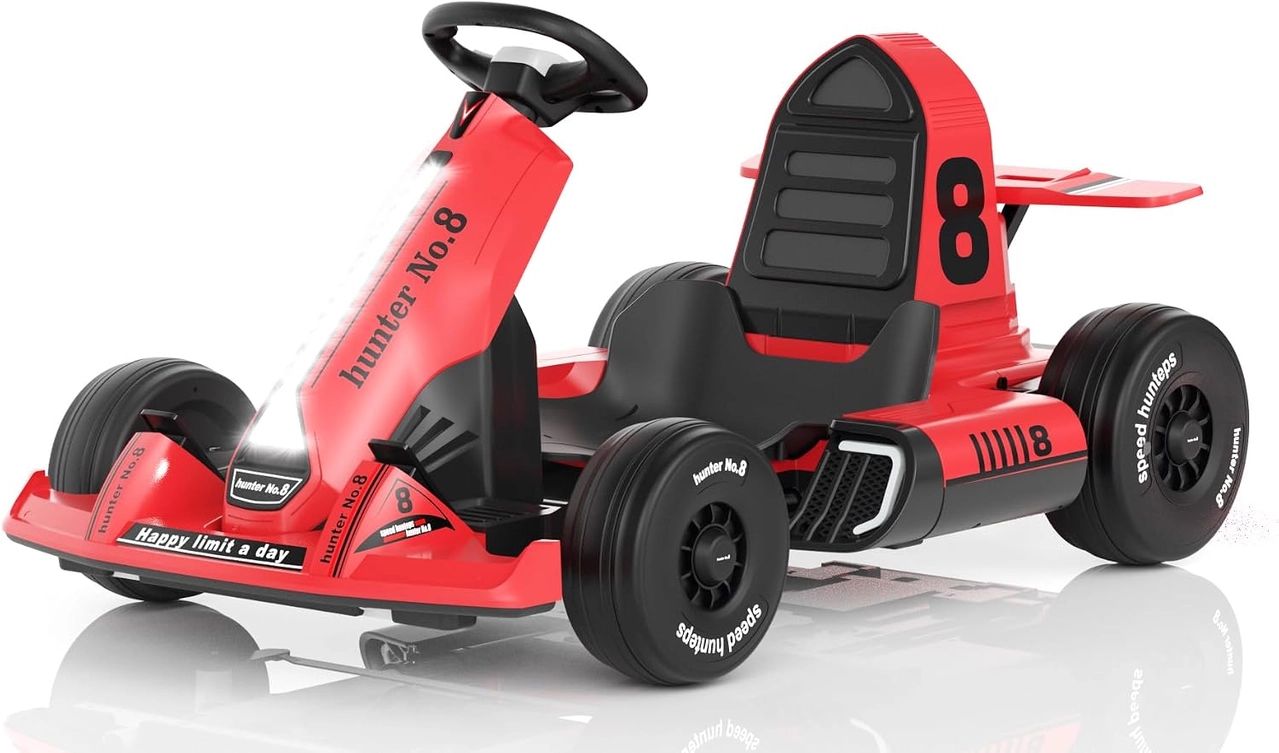
Higher voltage buys both pace and endurance: 6V karts typically deliver shorter runs, 12V a solid session of continuous driving, and 24V the longest. Whichever tier you choose, plan on charging after each session rather than letting the pack sit discharged — habit matters more than any single number on the charger.
Color and finish
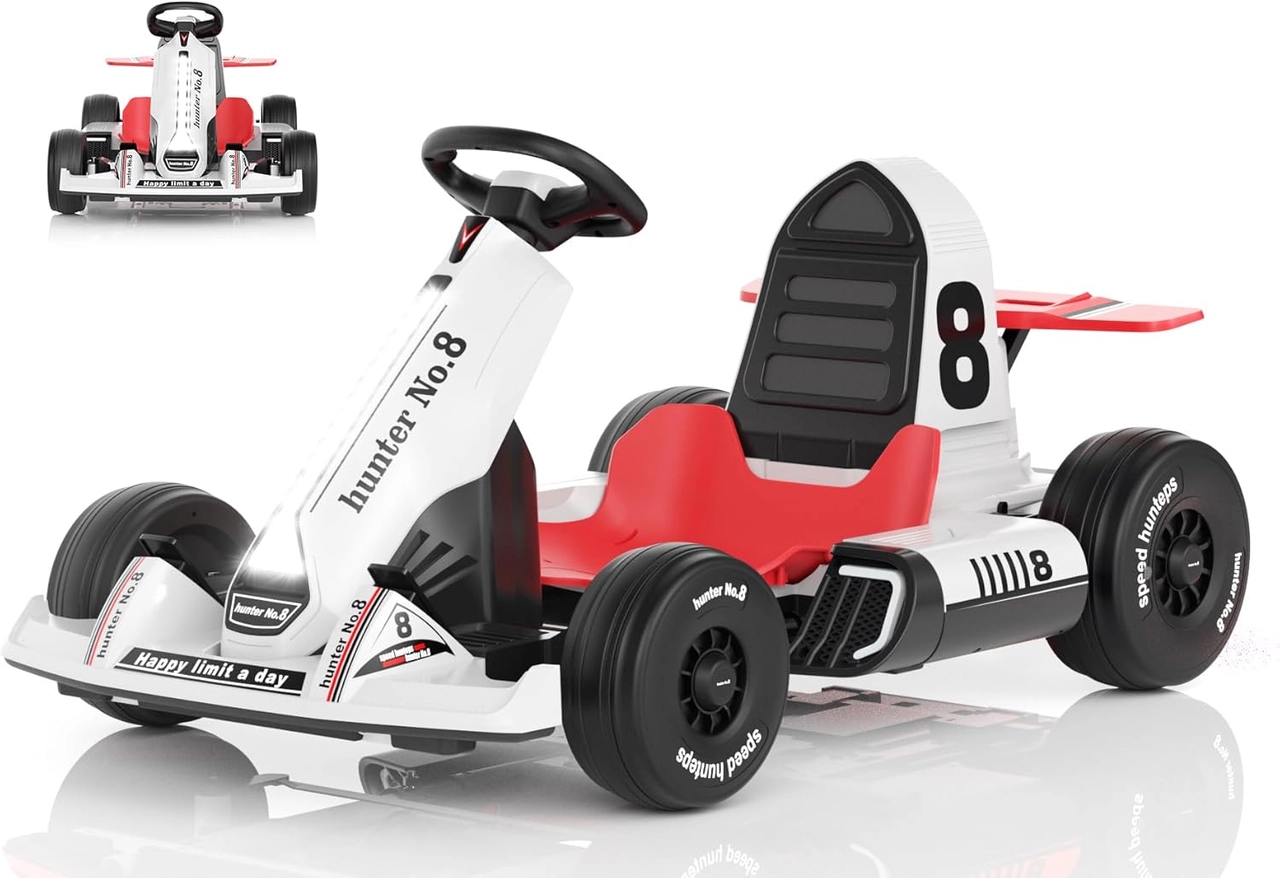
Each voltage tier comes in black, red and white. The color costs nothing performance-wise, so let the driver choose it — a kart in the driver's chosen color gets driven, and a kart that gets driven is the one whose maintenance gets done.
Common questions
Can a 12V kart be limited to a slower speed for beginners?
Supervised first sessions on flat ground away from obstacles are the practical limiter. Teach the stop before the start and the first week can be deliberately slow.
Is 24V too much for a first kart?
For most first drivers, yes. The 24V tier rewards drivers who already respect braking distance; it is a second kart, not a first one.
Bottom line
2–4 years old starts at 6V, most drivers between 4 and 8 belong at 12V, and 24V is earned. Every current tier and color is in the kids go kart collection for a side-by-side comparison.