


Kids Go Kart Stopping Distance: Plan a Clear Riding Area
Kids go kart stopping distance cannot be read from battery voltage or guessed from the size of a driveway. The vehicle's stopping system, speed, surface and the child's response all affect how much clear room is needed. Begin with the model instructions, a dry level traffic-free area and supervised low-speed practice. If stopping is unpredictable, end the session and identify the cause.
Plan kids go kart stopping distance conservatively
Inspect the whole riding area before switching on. Keep it away from roads, water, steps, slopes, pets and pedestrians. Leave room for the child to recognize the stop instruction as well as room for the kart itself to stop. A fence, parked car or wall is not a substitute for a clear stopping area; do not aim the kart toward one.
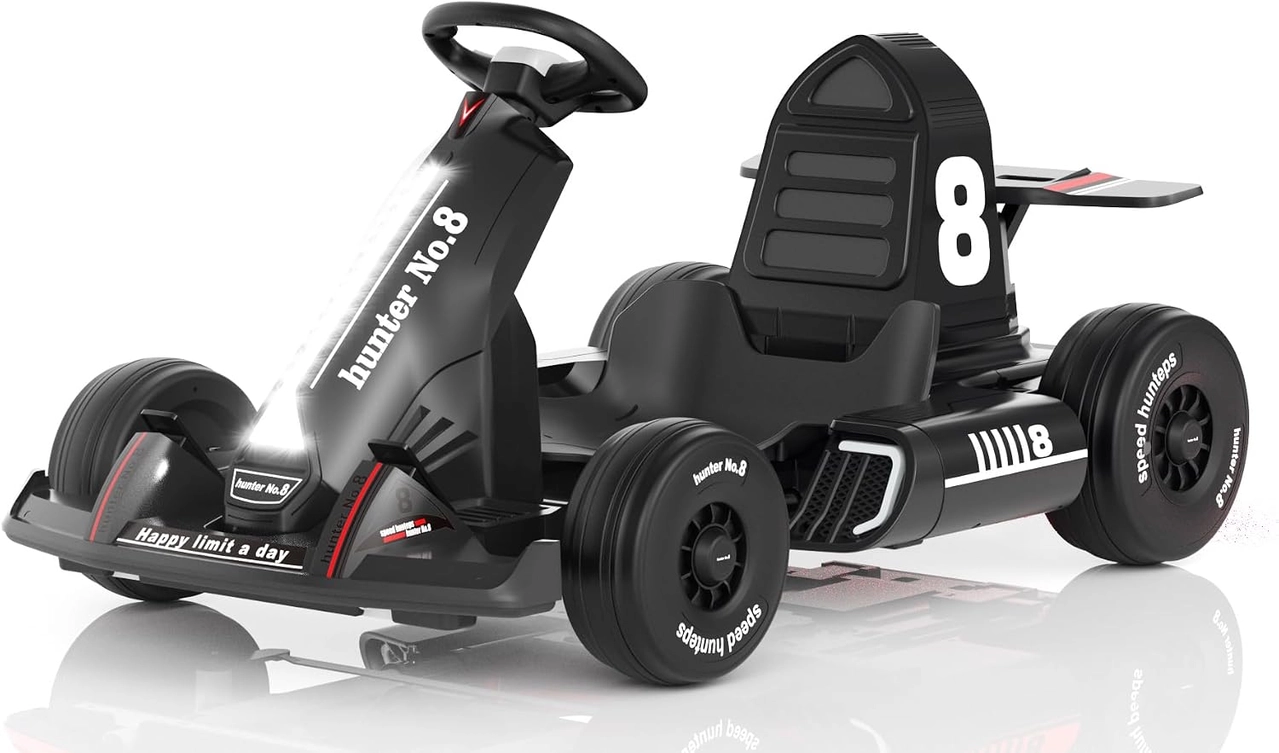
Understand the actual stopping controls
Read how the selected vehicle slows and stops, including any pedal and remote functions. Confirm those controls with no child aboard where the manual permits, then begin supervised practice at the lowest suitable setting. Do not assume releasing the accelerator always produces the same result on every ride-on. A remote feature supplements adult supervision and does not promise an instant stop.
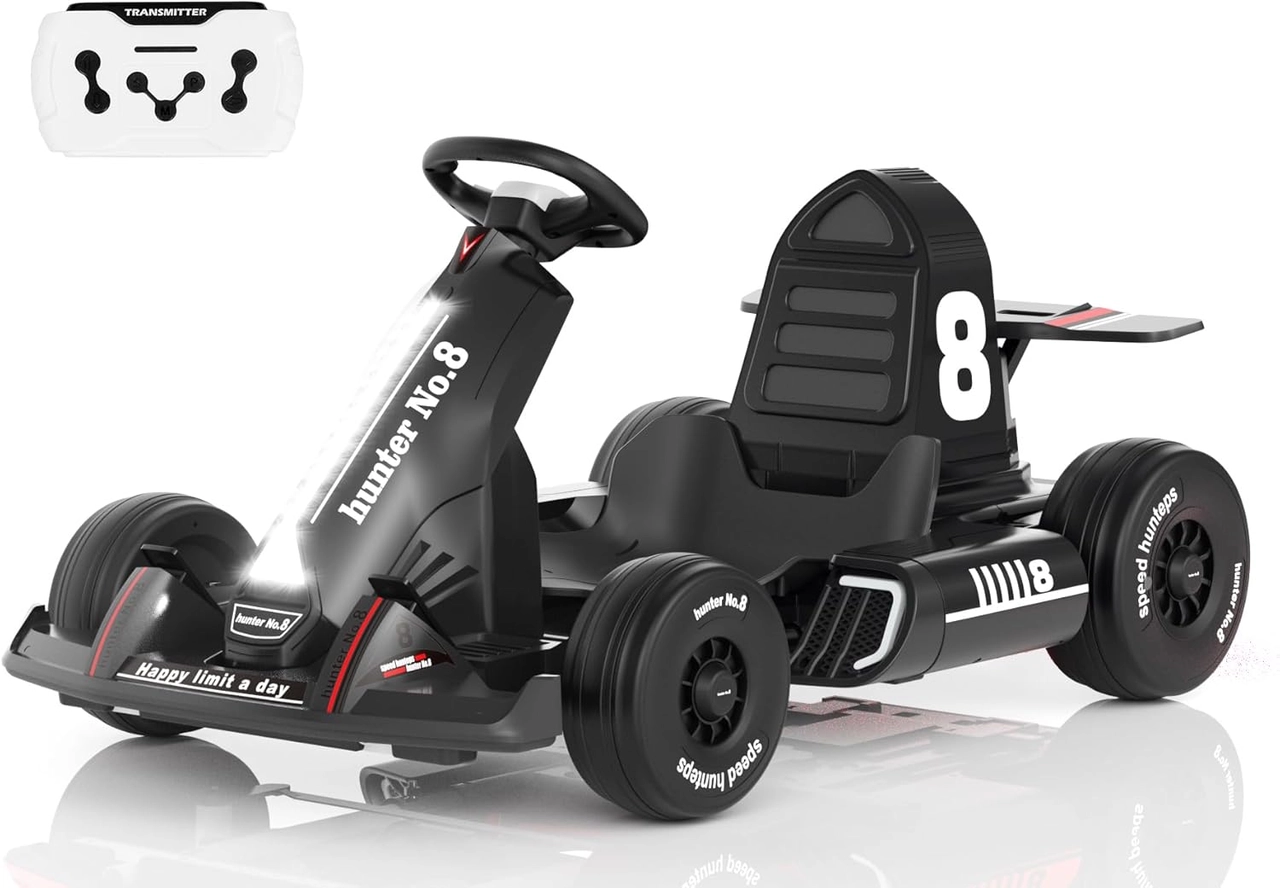
Practice slowly with a clear end point
Choose a visual stopping point within the open area, well before its boundary. Ask the child to start gently and use the prescribed stopping action. Observe whether the instruction is understood and the vehicle behaves consistently. Do not increase speed to measure a maximum braking distance. If the kart continues unexpectedly or a pedal fails to return, stop use and arrange service.
Reassess after any change
Wetness, loose debris, a different riding setting or a different driver can change the result. Repeat appropriate low-speed checks after a configuration change and keep the surface clear. The black 12V and 24V XJD models are separate configurations; never transfer a stopping assumption between them just because their bodies look alike. If you cannot provide enough open room, choose another activity.
Model details relevant to this task
Both linked black XJD karts list manual and parental remote modes. Their voltage tiers differ, and neither product listing provides a universal stopping-distance figure. Use the supplied control instructions and a conservatively chosen area rather than calculating clearance from advertised maximum speed alone. The linked model details are available for XJD Electric Go Kart for Kids – Black 12V, XJD Electric Go Kart for Kids – Black 24V.
Quick checklist
- Keep the area level, dry and free of traffic.
- Read the model's stopping instructions.
- Allow response time as well as vehicle travel.
- Use low-speed supervised practice.
- Stop for any unpredictable control response.
Common questions
How many feet should every kids go-kart need to stop?
There is no verified universal distance for these vehicles. Follow model guidance and preserve generous clear space for the actual conditions.
Can I use a wall as the end of the practice run?
No. Keep practice well away from hard obstacles. The rider must stop under control before any boundary or hazard.
Related collections
The 12V go-kart models and 24V go-kart configurations and kids electric go-karts provide further model details. Check the exact selected configuration when planning fit, handling and care.
Before the next outing
Treat kids go kart stopping distance as an area-planning question, not a fixed number. Understand the controls, keep practice slow and stop whenever the rider or vehicle cannot respond predictably.